



Twelve circuits in a millimetre of height
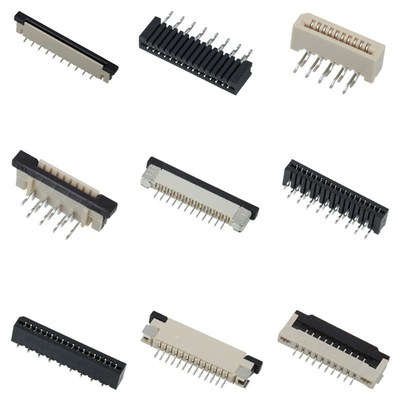
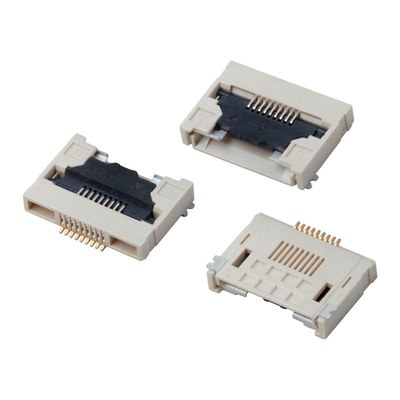
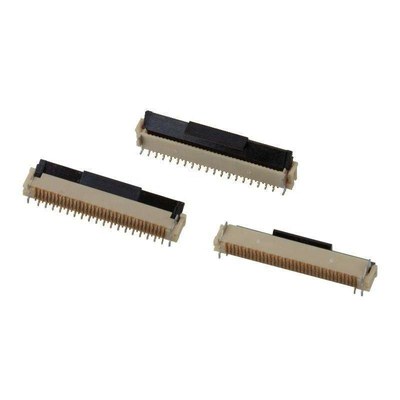
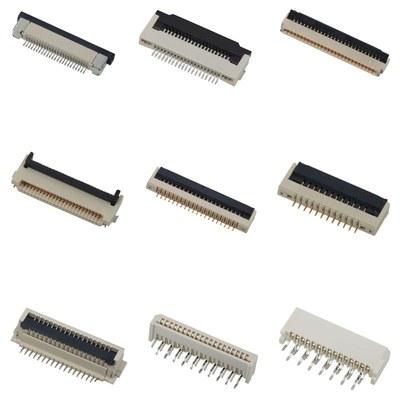
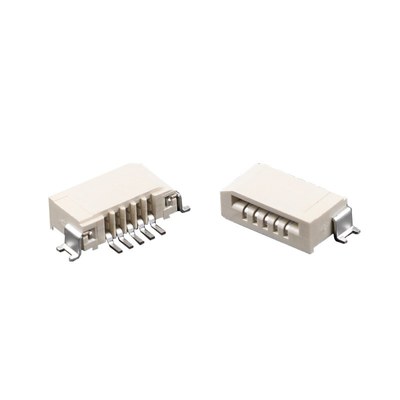
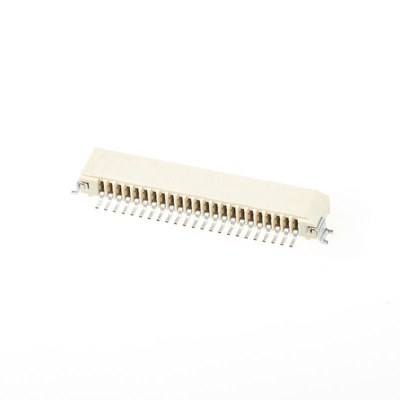
H1.0 mm is a shallow seat, and twelve circuits at 0.5 mm pitch fit inside it without the connector standing proud of a thin enclosure. This is the sort of part that goes behind a display panel or under a sensor board where the mechanical stack has almost no room left. The flip lock holds the tail down across the contact row, and the low profile means the actuator sits nearly flush rather than sticking up above the housing.
The flip lock as a one hand operation
A flip lock is a hinged bar that rotates down over the inserted tail. It is quicker than a sliding latch and easier to verify by feel, which matters on an assembly line where the operator cannot see the contact area. The compromise is that the bar needs clearance to swing, so the layout must leave a little space at the entry side. Expect no more than 20 mΩ max contact resistance, at 0.5 A typical per circuit.
Top or bottom contact on the same footprint
The brief allows both top and bottom contact versions, and the choice follows which way the flexible circuit faces on the board. Top contact is the usual layout; bottom contact lets the tail run under the connector when a shield sits above. Do not assume the two share a footprint, because the contact row moves with the tail. Withstand is 250 V AC typical, insulation 500 MΩ min, and the -40 °C to +105 °C typical range covers most indoor electronics.
 008613534059456
 whatsapp:joy
 overseas@hongyian.cn
