


DIN 41612 Connector Explained: Eurocard, Backplane and Other Names
Time:2026-03-04
Views:26
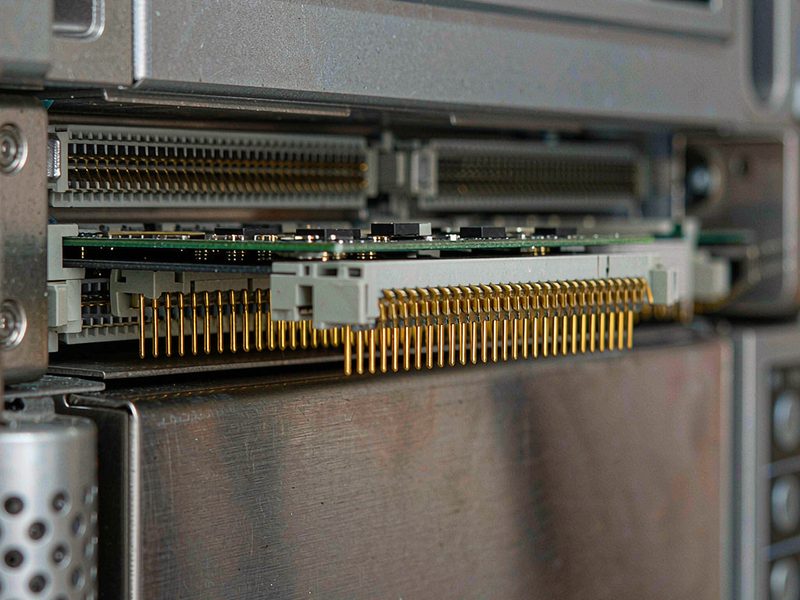
DIN 41612 is the two-piece backplane connector you‘ll find inside industrial computers, telecom racks and test systems — the rectangular plug and socket that carries a whole bus of signals between a board and its backplane. The confusing part isn‘t the connector, it‘s the names, because it has three of them and they all mean the same thing.
Why the name soup. DIN 41612 is the German standard number that defined the connector, so engineers in Europe and North America call it that. Eurocard is the board format it usually sits on — the 100mm × 160mm plug-in board — so you‘ll hear the connector called the Eurocard connector too. And because it‘s a backplane connector, some people just call it that. Same part, three labels. When you‘re searching for it, try all three; suppliers index it under different names.
The types you‘ll actually encounter. The family is split by the shape of the mating interface. Type B is the most common — 2 rows, 32 pins, used for general board-to-backplane. Type C is 3 rows, 96 pins, for denser busses. Type R is half of a Type C, 3 rows of 32. Then there are the power and RF variants — Type D, E, F — which carry higher current or coax instead of plain signal pins. If a system says "DIN 41612" without a type, it‘s almost always a Type B or Type C.
Pin counts. Type B gives you 32 pins, Type C gives you 96, and the half-height R gives you 32 in three rows. Beyond the base types you can get them with a mix — signal contacts plus a few power contacts — and with different termination styles: solder, press-fit, or wire-wrap, depending on how the backplane is assembled. Press-fit is the one to know about if you‘re building in volume, because it saves a whole wave-solder step.
Why the naming actually matters. When you‘re ordering replacements, the type letter and the row count are what actually determine fit — a Type B won‘t mate with a Type C, and a half-height R won‘t fill a full C socket. So quote the type letter and the pin count, not just "a DIN 41612 connector". The standard also has a DIN 41612 codification for the plating and mating level, but for sourcing, type letter + rows + termination is enough to get you the right part. We stock Type B, C and R in straight and right-angle, solder and press-fit, and we‘ll match the plating your backplane calls for. Factory-direct pricing beats the branded channels, with shorter lead times. If you‘re interested, please contact us right away.
Frequently Asked Questions
What is a Eurocard connector?
Eurocard is another name for the DIN 41612 connector, from its use in the Eurocard PCB form factor. It is the same IEC 60603-2 connector family.
What is the difference between Type B and Type C?
Type B has two rows (64 pins) and Type C has three rows (96 pins). Both are 2.54mm pitch, straight or right-angle.
Can I order partial loading?
Yes, partial-loading versions (for example 32, 48 or 64 pins in a Type C shell) are common, and we supply them with gold or tin plating.
 008613534059456
 whatsapp:joy
 overseas@hongyian.cn
