


Pin Header Pitch: 1.27mm vs 2.0mm vs 2.54mm Explained
Time:2026-06-09
Views:54
Pitch is just the distance from one pin to the next, and on a pin header it changes a lot more than you‘d think. The three you‘ll meet most are 2.54mm, 2.0mm and 1.27mm, and they each have a personality.
2.54mm — the default This is the classic 0.1-inch pitch, and it‘s the default for a reason. Big enough to hand-solder comfortably, robust enough for prototype boards, and compatible with breadboards and shields. If you don‘t have a reason to go smaller, stay here.
2.0mm — the middle ground 2.0mm packs a bit more density while staying reasonably easy to work with. It shows up in compact consumer boards where 2.54mm eats too much room but you don‘t need to go extreme.
1.27mm — the space saver 1.27mm is half the pitch of 2.54mm, so it roughly quarters the footprint. You‘ll see it in tight, high-density designs. The catch: it‘s fiddly to solder by hand and the pins are delicate, so it‘s really for reflow, not prototypes.
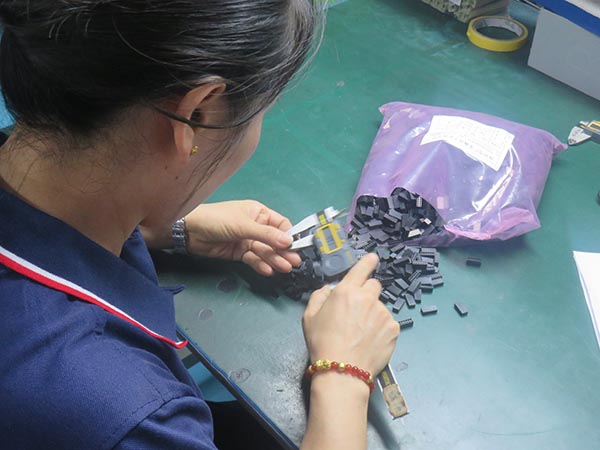
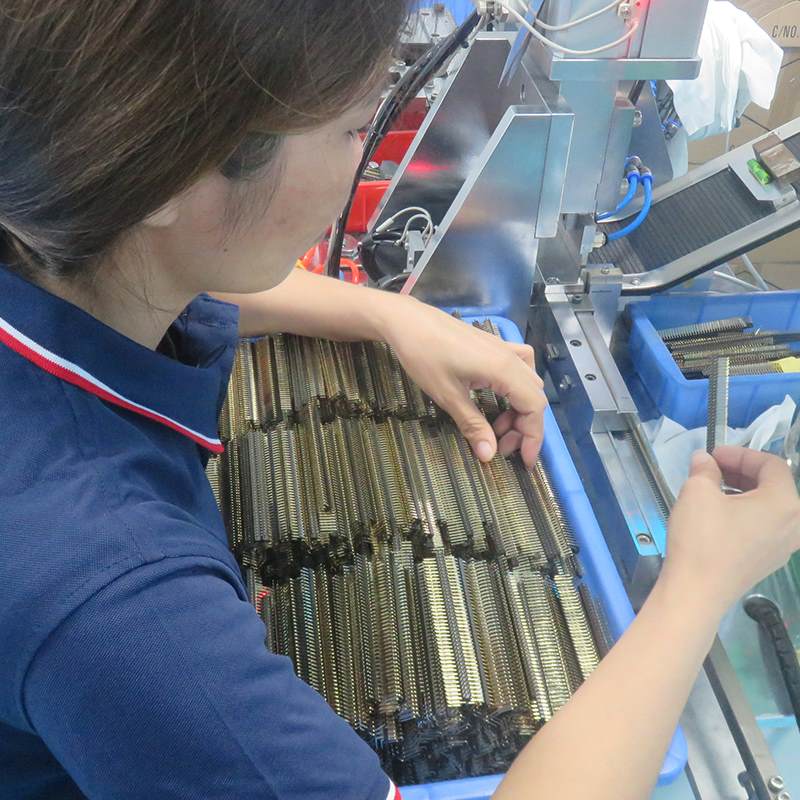
The photograph shows our process of first carrying out a manual quality check on the pin headers, followed by a machine check.
| Pitch | Density | Hand-solder | Typical use |
| 2.54mm | standard | easy | prototypes, shields |
| 2.0mm | higher | moderate | compact boards |
| 1.27mm | highest | hard | high-density, reflow |
The practical bit If you‘re choosing, remember pitch also decides what mates with it — a 2.0mm socket won‘t take a 2.54mm header. So lock the pitch to whatever you‘re connecting to. We stock pin headers in all three pitches, single and dual row, straight and right-angle, with standard and custom plastic heights.
If you are unsure which pitch specification to adopt, please consult our engineers first; our R&D team will provide you with the most appropriate advice.
Furthermore, the surface treatment of the pin headers will vary depending on your specific application. Typically, we offer gold-plated, tin-plated and nickel-plated finishes, amongst others, and the thickness of the plating may also differ; therefore, the final specifications should be determined based on the practical application
We offer bespoke services, so please do get in touch if you’re interested.
Frequently Asked Questions
What is the difference between 1.27mm, 2.0mm and 2.54mm pitch?
It is the pin-to-pin spacing. 2.54mm is the default for general use, 2.0mm saves board space, and 1.27mm is for high-density designs.
Which pitch should I choose?
Match it to your mating socket and current. Larger pitch carries more current and is easier to hand-solder; smaller pitch packs more pins into less space.
Do you stock all three pitches?
Yes, in single and dual row, straight and right-angle, with your choice of plating and plastic height.
 008613534059456
 whatsapp:joy
 overseas@hongyian.cn
