


Time:2024-10-08
Views:108
When etched traces are worth the tooling
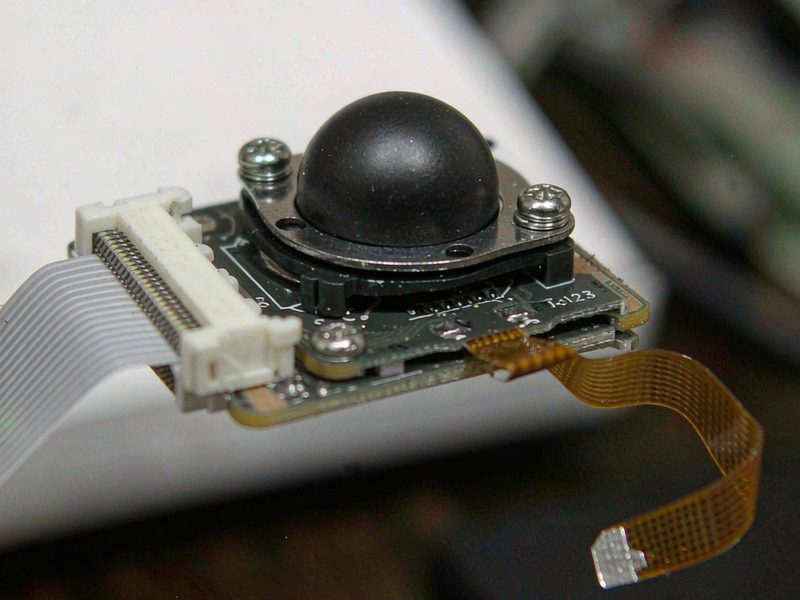
FPC is a circuit, not just a cable. Because the copper is etched, you can route traces around corners, branch them, or land on odd-shaped pads, and that is why cameras and folding devices use it. The trade is a tooling cost and a lead time for the flex itself. If the layout is stable and the shape is awkward, that cost pays for itself. If the run is straight, it usually does not.
Here‘s the one-line version: FPC is a flexible printed circuit — a thin film with copper traces etched onto it, so the connector and the traces are part of the same circuit. FFC is a flat flexible cable — a ribbon of straight conductors laminated in polyester, with connectors at one or both ends. Same job, different animal. You pick based on whether you need the traces to be custom or you just need a straight, cheap run of wires.
FPC, the flexible circuit. Because the traces are etched, you can route them any way you like — curves, branches, odd-shaped pads — and pack a lot of signal into a tiny space. That‘s why FPC shows up in cameras, phones, laptops and anything that folds or twists in use. The connector side is usually a ZIF (zero insertion force) type, with pitches from 0.3mm up to 1.0mm and contact counts into the dozens. It‘s the more capable option, and the more expensive one, because the circuit itself is custom.
FFC, the flat cable. FFC is just straight parallel conductors — 0.5mm, 1.0mm or 1.25mm pitch, any length you want — and it‘s cheap to make in quantity. It plugs into an FFC/FPC connector on the board, and you‘ll see it inside printers, TVs, DVD drives and office machines, usually carrying display or data lines. Same ZIF connector family, same 0.3–1.0mm pitch range, but the cable is a commodity part rather than a custom circuit.
Where flat cable is the cheaper answer
FFC is a laminated ribbon of parallel conductors, typically 0.5, 1.0 or 1.25 mm pitch, cut to whatever length you need. It is cheap in volume and simple to replace in the field, which suits display links and board-to-board jumps inside a chassis. You cannot route it around a corner the way you can an etched circuit, so the mechanical path has to be planned first.
Choosing the connector. Both FPC and FFC land in the same style of connector, so the connector spec is where the real decisions are: pitch (0.3/0.5/1.0mm), contact count, and contact orientation — top contact, bottom contact or dual contact. Then there‘s the flip-lock vs slide-lock question; flip-lock is easier to open by hand, slide-lock is lower profile. Pay attention to height too, because these things get thin. If the cable flexes a lot, spec the connector to match the cable thickness, or you‘ll get intermittent opens at the contact point.
A quick note on sourcing: the brand-name FPC/FFC connectors are widely cloned, but quality varies a lot at the 0.3mm end, so it pays to buy from a factory that can show you the contact geometry and plating thickness. We stock ZIF connectors from 0.3mm to 1.0mm with top, bottom and dual contact, and we make custom FFC to length. If you‘re interested, please contact us right away.
Connector details that decide the fit
Both land in the same style of connector, so pitch, contact direction and the ZIF or LIF mechanism are where the real decisions sit. At 0.3 mm the tolerance for a slightly warped cable end is small, and cheap clones show their age there. Tell us the cable thickness and whether the operator will be inserting by hand or with a fixture. That usually settles the actuator choice without a long email chain.
Frequently Asked Questions
Can I use an FFC in an FPC connector?
Often yes, if the pitch and contact position match, because both use the same ZIF/LIF connector family. Always check cable thickness and contact surface first.
What is the difference between ZIF and LIF?
ZIF (zero insertion force) has a flap or slider you lift to release the cable; LIF (low insertion force) simply grips it. ZIF is gentler for repeated use.
What pitch do you stock?
0.5mm and 1.0mm FPC/FFC connectors with top, bottom and dual contacts, plus matching flat cables.
 008613534059456
 whatsapp:joy
 overseas@hongyian.cn
