



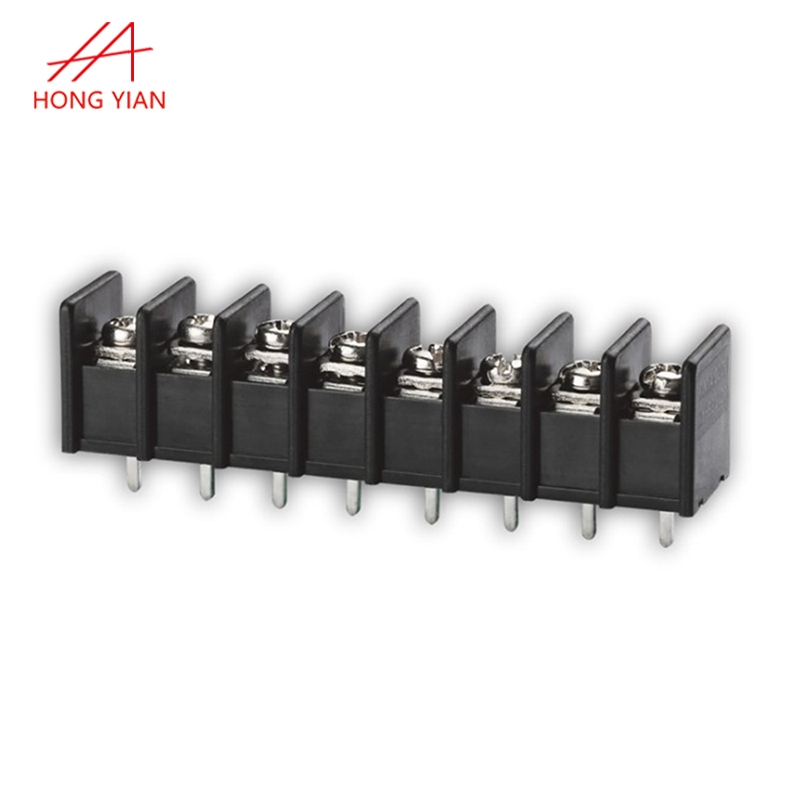

Nine point five millimeters of barrier
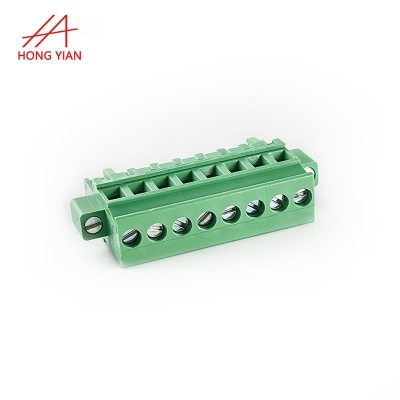
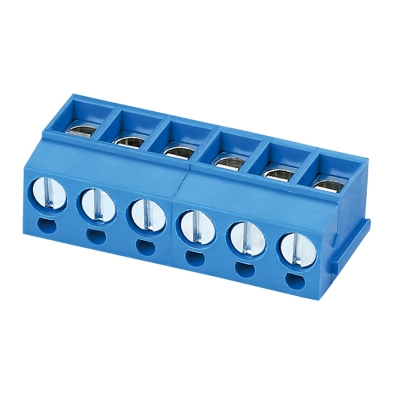
A barrier terminal block is the classic panel joint: screw posts, raised walls between them, and a ring or fork terminal clamped under the screw. At 9.5 mm pitch the walls have room to stand tall, which is why this format shows up on power panels where the posts carry real current. The type is barrier, the spacing is 9.5 mm, and the row takes wire that a tech can dress with standard hand tools.
Twenty amps at three hundred volts, written plainly
The rating on this block is 20 A at 300 V with no asterisk, and the withstanding test runs 2000 VAC/DC. Contact resistance is 20 mΩ max and insulation resistance 100 MΩ min. At 20 A through 20 mΩ the joint dissipates around 8 W if the contact is at its limit, which is exactly why torque on the screw is part of the spec and not a matter of feel. The operating window is -40 °C to +105 °C typical.
Torque, ring terminals and the panel build
Panel practice on a barrier block is short: ring terminal sized for the post, screw torqued to the figure in the FAQ, and the wire dressed so the ring cannot spin under vibration. Paint mask or a star washer keeps the bonding face clean. Stock blocks ship in eight working days, so a panel shop is never waiting on hardware to finish a cabinet.
 008613534059456
 whatsapp:joy
 overseas@hongyian.cn
