



The 7.62 mm barrier tightens the row
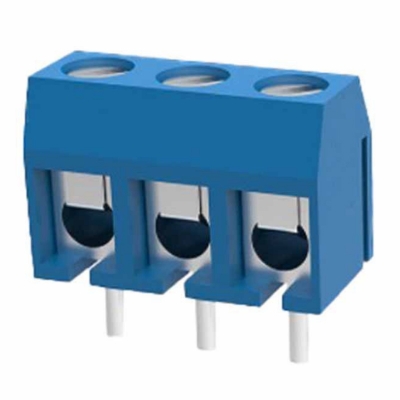
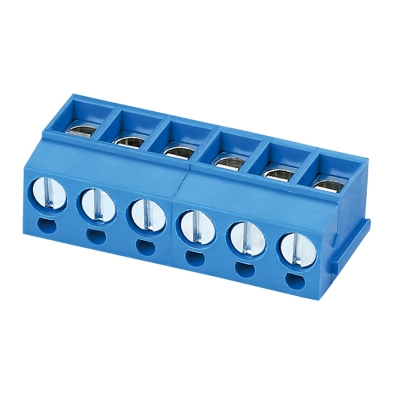
Move a barrier block from 9.5 mm to 7.62 mm and the same panel job fits in less rail space. The posts still take ring or fork terminals, the walls still stand between circuits, and the screw is still a screw. What changes is the density: more poles per centimeter, which is what a control cabinet wants when the rail is already crowded. The type is barrier and the pitch is 7.62 mm.
Creepage and the 2000 V test
This block is rated 20 A at 300 V with a 2000 VAC/DC withstand, the same envelope as its 9.5 mm sibling, so the tighter pitch does not cost voltage class here. Contact resistance is 20 mΩ max and insulation 100 MΩ min, across a -40 °C to +105 °C window typical. The barrier walls earn their name by tracking creepage across the surface between posts, which is the path a high voltage test actually stresses.
Panel density with the screw still reachable
Density only helps if a driver still fits between the posts. At 7.62 mm that is usually true with a standard screwdriver; at tighter pitches it is not, and that is where plugs take over. Torque to spec and the joint runs cool. A barrier block in a custom pole count leaves in 10 to 12 working days, and the drawing that specifies it stays valid for the reorder.
 008613534059456
 whatsapp:joy
 overseas@hongyian.cn
