


What aviation plug styling means on an M12 sensor lead
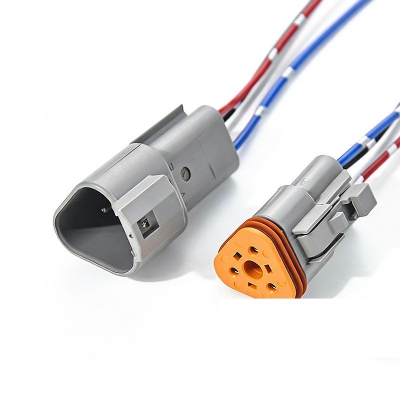
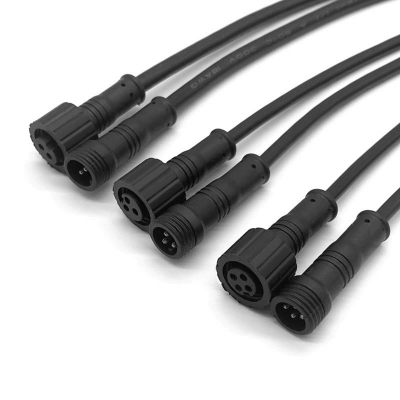
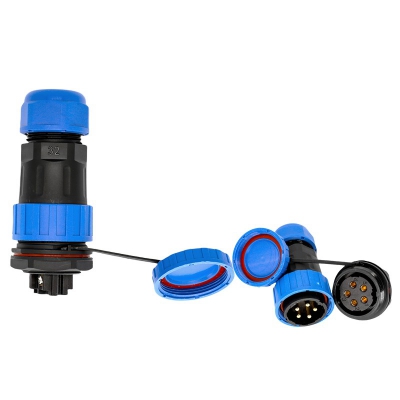
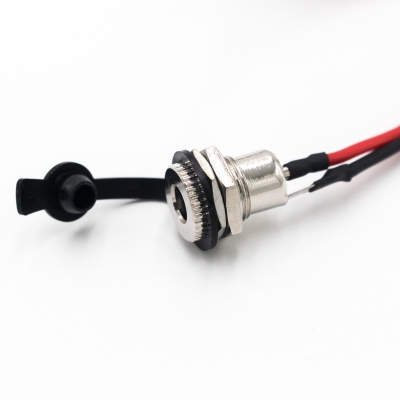
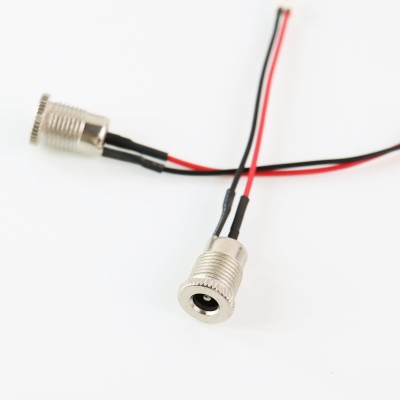
The aviation plug label on this M12 points at the shell and the coupling ring, not at an aerospace spec. You get a metal threaded collar, a positive feel when the pair locks, and a body that survives a gloved hand on a machine platform. This 5 pin sensor version is rated 4 A typical at 250 V AC typical with 5 mΩ max contact resistance and waterproof sealing. It suits robotics, packaging heads and machine tools where the sensor lead gets grabbed, twisted and left in coolant mist. The coupling ring is what keeps the joint from backing off under vibration.
Assigning five pins on a sensor trunk
Five positions is the classic mix for a prox or photo sensor: two for supply, one for the output, and two spare for a second channel or a shield. Keep the pin map on the drawing and match it at both ends, because a 5 pin M12 will happily mate with the wrong pinout and fail in confusing ways. Insulation resistance is 100 MΩ min and withstand voltage 1500 V AC typical. Coding on M12 housings blocks the worst mismatches, but only if the coded halves are stocked separately. Our wire-to-board checklist covers the cabinet end strain relief.
Specifying the sensor end and the cabinet end together
Sensor leads are quoted as a set: the plug at the head, the socket at the cabinet and the cable between them. Free standard samples in small counts are available for a fit check before the release quantity, which is the cheap way to confirm thread and key. Cable length and jacket are open while the machine is being laid out, and standard builds leave in eight working days. Our cable assembly line builds the full lead with both halves fitted.
 008613534059456
 whatsapp:joy
 overseas@hongyian.cn
